Japanese Jewelry Trends 2026: What the World Will Copy Next
Deep, expert analysis on the motifs, materials, technologies, and cultural shifts emerging from Japan - and how they will shape global jewelry for years to come.
Japan has always been a quiet but decisive force in jewelry: measured, craft-driven, and aesthetically rigorous. In 2026 that influence accelerates. What makes Japan’s impact different is not just technique or materials, but a cultural synthesis - craftsmanship
(kogei) fused with thoughtful technology, an aesthetic of restraint made expressive, and a sustainability ethic that is both practical and poetic. Below I map the most consequential Japanese jewelry trends for 2026 and explain exactly how (and why) the rest of the world will adopt them.
1. Quiet Maximalism - Boldness, But with Restraint
The pendulum that swung toward “quiet luxury” will recalibrate into quiet maximalism: pieces that are visually striking but executed with
Japanese restraint. Think large forms with refined surfaces - a chunky gold chain with a laser-polished curvature rather than a loud textured rope; a statement cuff whose silhouette is architectural, not ostentatious.
Why it spreads: global consumers want wearable drama that reads as intentional, not showy. Designers in New York, London, and Seoul will copy the Japanese method of proportion - statement without excess.
Search signals: bold gold, chunky gold chains, statement jewelry refined.
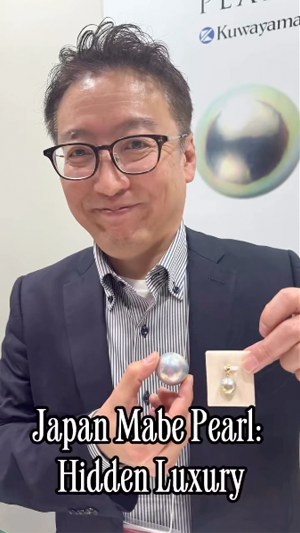
2. Pearl Reinvention - Beyond the Strand
Japan continues to reinvent pearl use. In 2026 expect to see:
• Sculptural Akoya: asymmetric multi-pearl compositions that read like wearable sculpture.
• Blue Akoya diffusion into mainstream haute jewelry (carefully catalogued as certified natural blue lots).
• Pearl + industrial materials: pearls set with blackened titanium or matte platinum for modern contrast.
Why it spreads: pearls are versatile - they bridge classic and
contemporary. Western couture and ready-to-wear alike will copy Japanese pairing of pearls with matte, architectural metals.
Search signals: Akoya pearls 2026, natural blue Akoya, pearl modern styling.
3. Heritage Techniques, Reworked - Kintsugi, Mokume-gane, Urushi in Contemporary Wear
Traditional Japanese metalwork and surface techniques will become mainstream sources of texture and story:
• Kintsugi-inspired joins (visible
gold repairs reimagined as design elements).
• Mokume-gane patterns reinterpreted into slim band collections and unexpected inlays.
• Urushi lacquer accents in small dose - e.g., a lacquered bezel or enamel-like interior.
Why it spreads: these techniques carry instant narrative and provenance. Western houses will commission artisan-run micro-collections using these methods to add authenticity.
Search signals: mokume-gane jewelry, kintsugi jewellery trend, urushi jewelry.
4. Micro-Luxury Customization - 3D Design Meets Master Artisans
Japan’s boutique studios are pairing CAD/3D printing with hand finishing more fluently than anywhere else. Expect a boom in:
• Made-to-order micro-collections where buyers choose metal, finish, and tiny custom engraving - produced in under two weeks.
• Hybrid fabrication: 3D-printed cores finished with traditional hand hammering, chasing, or patina.
Why it spreads: the demand for personalization is global. Brands will adopt Japanese studio models to offer short-run bespoke pieces that scale economically.
Search signals: custom jewelry Japan, 3D printed gold jewelry, hybrid jewelry making.
5. Ethical Traceability as Design - Materials with Verifiable Origin Stories
Japanese producers are leading on traceability for pearls, recycled gold, and locally sourced semi-precious stones. In 2026 this becomes design language:
• Jewelry will carry QR-linked provenance cards that are elegantly designed (not just a receipt).
• Recycled metal will be celebrated visually - joins, layered finishes, and inlay contrasts that advertise the material story.
Why it spreads: consumers increasingly demand proof. Brands worldwide will adopt transparent provenance models developed in Japan, turning traceability into a marketing and design advantage.
Search signals: traceable pearls, recycled gold Japan, jewelry provenance QR.
6. The New Neutrals - Silver-White Palettes and Cool Tones
While warm yellow gold reasserted itself, Japan will popularize a parallel neutral: cool, silver-white palettes - platinum, palladium, icy Akoya, and natural blue tones. This isn’t cold minimalism; it’s refined futurism.
Why it spreads: the fashion industry’s growing appetite for genderless jewelry and tech-inspired looks will adopt these cool palettes as the alternative to gold maximalism.
Search signals: platinum jewelry 2026, cool-tone pearl jewelry, genderless jewelry trends.
7. Lab-Grown Diamonds, But Curated - Design-First Adoption
Japan’s acceptance of lab-grown diamonds will mature into a design-first approach: lab-grown stones will be used where scale and symmetry are priorities (pavé, geometric fields), while mined stones remain central for uniqueness and rarity.
Why it spreads: designers in the West will copy the Japanese editorial restraint - using lab-grown
diamonds to create ethically minded, design-forward pieces without losing the cachet of natural stones.
Search signals: lab-grown diamond design, lab-grown engagement rings Japan, ethical diamond jewelry.
8. Jewelry-as-Technology - Wearables Reimagined with Elegance
Japan’s tech culture will produce subtle jewelry-integrated functionality in tasteful forms:
• NFC-enabled pendants with provenance and care data.
• Minimalist smart rings that
prioritize form, not gadget-showing.
• Gemstone sensors for humidity or UV exposure tucked discreetly into clasps.
Why it spreads: wearable tech has to evolve from gadget to jewelry; luxury tech brands will emulate Japan’s aesthetic-first approach.
Search signals: luxury wearable jewelry, NFC jewelry provenance, smart rings discreet.
9. Vintage Curation and Condition Standards - Tokyo’s Secondhand Model Globalized
Tokyo’s strict preservation culture and rigorous authentication procedures set a new standard. Expect:
• Global resale platforms to adopt Tokyo-style multi-step authentication (photo microscopy, stitch pattern analysis, provenance checks).
• Curated “Japan condition” listings that command a premium.
Why it spreads: buyers worldwide want confidence when purchasing vintage; retailers will adopt Tokyo’s authenticity protocols to build trust.
Search signals: vintage jewelry authentication, Japan condition
vintage, pre-owned jewelry standards.
10. Gender Fluidity and New Rituals - Jewelry for Identity, Not Just Ceremony
Japanese designers are creating pieces that function as personal insignias rather than gendered ornaments: asymmetric ear stacks, mixed-metal signet reinterpretations, and multipurpose pendants that convert easily between jewelry types.
Why it spreads: global fashion’s move toward identity expression
over prescribed gender roles will embrace these concepts.
Search signals: genderless jewelry 2026, convertible jewelry designs, personal insignia jewelry.
11. Small-Scale Ethical Labs - Local Supply Chains for Gem Treatments and Testing
Japan’s small analytical labs and ethical treatment centers provide accurate, rapid certification for colored gems and pearls. Expect the world to copy this decentralized lab model - accessible, boutique labs offering transparent analytics to
local retailers.
Why it spreads: democratizing gem testing improves the entire market; retailers will partner with local labs modeled on Japan’s system.
Search signals: local gem lab Japan, ethical gem testing, PSL-style certification.
12. Editorial-Driven Product Drops - Exhibition-to-Collection Pipeline
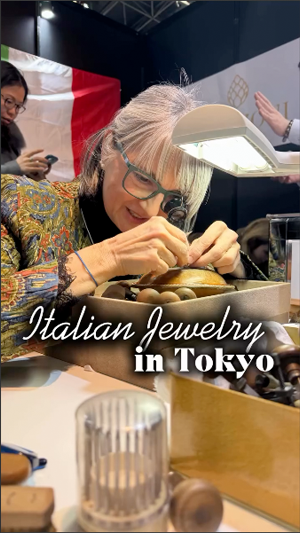
Japanese exhibitions (TJF, IJT, regional auctions) will continue to serve as incubators. The novel pattern of “exhibit an idea → limited
run → editorial drop” will be adopted by designers globally. Expect:
• faster trend cycles originating at exhibitions
• limited-edition capsule drops tied to shows
• collaborative pop-ups between Japanese ateliers and Western maisons
Why it spreads: it’s an efficient creative pipeline that creates scarcity and storytelling.
Search signals: jewelry exhibition drops, limited edition capsule jewelry, Tokyo exhibition trends.
Practical Takeaways for Brands, Retailers, and
Designers
For brands: Adopt transparent provenance, commission artisan techniques in micro-collections, and blend lab-grown stones where design benefits.
For retailers: Train staff in Japanese-grade condition reporting, add QR provenance cards, and curate cool-tone and pearl-forward assortments.
For designers: Learn one Japanese technique deeply (mokume-gane, urushi, or kintsugi) and translate it into a modern minimal context; experiment with 3D print + hand finish.
For collectors and consumers:
Expect to pay premiums for PSL/Hanadama certification, matched blue Akoya strands, and vintage pieces in “Japan condition.” Prioritize provenance and condition over brand label.
Final Thought - Japan’s Influence Is Methodical, Not Flashy
The Japanese jewelry influence of 2026 will not feel like a fad. It will be a slow but measurable shift in the language of luxury: less about logos and more about material truth, craft-authenticated provenance, and thoughtfully designed presence.
What the world will copy is not just the look - it is the logic: how jewelry is made, documented, and lived with.