The Evolution of Japanese Engagement Rings: From Diamonds to Modern Alternatives
For decades, Japan has been one of the most influential yet understated markets in global bridal jewelry. While Western trends have shaped the early expectations around engagement rings, Japanese consumers have slowly - and very intentionally - rewritten the rules.
Today, the Japanese engagement ring is more than a symbol of commitment. It is a reflection of cultural aesthetics, personal values,
and an evolving definition of love in modern Japan.
Below is a deep examination of how Japanese engagement rings transformed from classic diamond traditions to the sophisticated, minimalist, and often unconventional alternatives trending in 2026.
1. The 1970s-1990s: The Rise of the Diamond Era
Japan’s diamond culture is younger than many think.
The De Beers Influence
It was De Beers’ advertising campaigns in the 1970s and 1980s that built the idea that “a diamond
engagement ring is a must” - a concept that quickly took root in Japan’s booming post-war economy.
Three Months’ Salary Rule
Interestingly, Japan is the birthplace of one of the world’s most famous marketing slogans:
“An engagement ring should cost three months’ salary.”
This idea, widely accepted for decades, shaped several generations of Japanese grooms and positioned the diamond as a national standard.
During this era:
• Round brilliant diamonds dominated.
• Platinum became the preferred metal due to its cultural association with purity and longevity.
• Rings focused on simplicity, perfection, and subtlety - traits deeply aligned with Japanese aesthetics.
2. The 2000s: Personalization Enters the Conversation
As Japan entered the new millennium, consumer behavior shifted.
A Growing Desire for Individuality
Couples began seeking subtle variations:
• Diamond shapes beyond round (oval, marquise, pear).
• Micro-pavé halos inspired by Western trends.
• Custom-made designs from boutique ateliers in Tokyo and Kyoto.
The idea of a ring being personal - rather than traditional - started gaining cultural weight.
3. 2015-2020: The Minimalism Revolution
Minimalism is not a trend in Japan - it’s a cultural philosophy.
In the mid-2010s, Japanese bridal
jewelry underwent another transformation:
Quiet Luxury Takes Over
Couples began favoring:
• Ultra-thin bands
• Solitary stones without halos
• Tiny melee diamonds set with precision
• Clean lines and architectural simplicity
These designs matched a broader lifestyle movement in Japan:
• Smaller weddings
• Less materialism
• Focus on longevity and quality over “flash”
Brands like I-PRIMO, 4℃, and
NIWAKA refined this minimalist aesthetic and made it mainstream.
4. 2021–2026: A New Paradigm - Beyond Diamonds
The most dramatic shift occurred in the last five years.
Japanese consumers - especially Millennials and Gen Z - began redefining what an “engagement ring” could be.
4.1. Lab-Grown Diamonds Become Mainstream
Japan is one of the fastest-growing markets for lab-grown diamonds because:
• They are ethically clean, which aligns with Japanese values
• Quality is extremely high
• Prices are transparent and easy to compare
• Larger stones become accessible without sacrificing purity
Today, many couples prefer a 1.0-1.5 ct lab-grown diamond over a much smaller natural diamond for the same budget.
4.2. Colored Gemstones Gain Prestige
A major trend in Japan:
Sapphires, rubies, emeralds, and padparadscha are increasingly
chosen for engagement rings.
Why?
• They symbolize individuality
• They create emotional connection through color
• Japanese consumers love cultural meaning (e.g., blue sapphire = harmony)
Japan’s elite ateliers are now producing world-class colored stone rings - with global collectors taking notice.
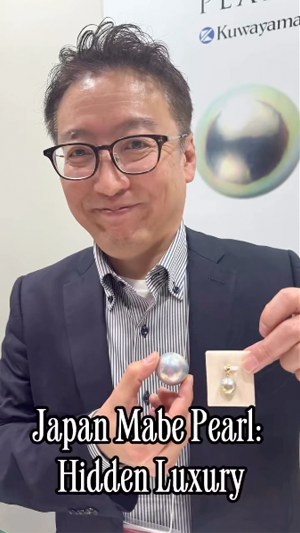
4.3. Pearls - A uniquely Japanese alternative
Only Japan could make pearls an engagement ring trend.
Akoya pearl engagement rings
appeal to women who want:
• Tradition with a modern twist
• Japanese craftsmanship
• Something soft, refined, and “quietly luxurious”
4.4. Non-traditional metals rise
While platinum is still king, 2026 shows growing demand for:
• Yellow gold (inspired by 80s revival)
• Rose gold (romantic, warm, feminine)
• Mixed-metal bands (architectural and modern)
5. What Couples Value
Today
According to the newest trends, Japanese couples prioritize:
1. Meaning over price
The emotional story behind the ring matters more than the size or cost.
2. Craftsmanship
Handmade settings from small local ateliers in Ginza, Aoyama, and Kyoto are becoming more desirable than big brands.
3. Ethical sourcing
Lab-grown, recycled metals, and traceable gems are rising rapidly.
4. Minimalism and subtle sophistication
The ring should harmonize with daily life, not overwhelm it.
5. Quiet individuality
Not flashy - but unmistakably unique.
6. The Future of Japanese Engagement Rings
By 2026, Japan is shaping global bridal trends in several ways:
• Lab-grown diamonds are becoming an international norm thanks to Japan’s early adoption.
• Japanese minimalism is influencing brands in Europe and the U.S.
• Colored gemstones are transitioning from “alternative” to luxury standard.
• Pearl engagement rings - once unthinkable - are gaining global interest.
Japan is no longer following global engagement ring trends.
It is setting them.