The Secret World of Yamanashi Gem Cutting - Japan’s Hidden Craft Capital
Japan’s jewelry industry is often associated with Akoya pearls, refined minimalism, and Tokyo’s cutting-edge designers.
But behind the scenes, far from the big-city showrooms, lies a region that quietly shapes the heart of the country’s gem culture: Yamanashi.
This mountainous prefecture - famous to tourists for its views of Mount Fuji - is also the undisputed craft capital of Japanese gemstone
cutting, a place where centuries-old techniques meet modern technological precision.
Yamanashi is not simply a production hub. It is a living workshop, a preserved ecosystem of artisans, cutters, polishers, and designers who keep Japan’s gem-cutting heritage alive.
This is the secret world that most outsiders never see - but collectors and jewelers around the globe are now rediscovering.
1. A Legacy Rooted in Mountains, Quartz, and Local History
Yamanashi’s gem-cutting traditions date back over 1,000 years.
The region is rich in:
• rock crystal quartz
• amethyst
• smoky quartz
• garnet
These stones formed naturally around the volcanic activity of Mount Fuji.
Local craftsmen began carving and polishing them during the Heian period, first for Buddhist objects and later for decorative adornment.
By the Edo period, Kōfu - Yamanashi’s capital - was known as the center of Japan’s crystal arts, supplying temples, aristocrats, and
traders across the country.
This heritage still defines the region today: Yamanashi is where the soul of Japanese gemstone work was born.
2. Precision Above All: The Japanese Approach to Faceting
While European and American faceting is driven by brilliance and optical performance, Yamanashi has a distinct philosophy:
the faceting must honor the internal nature of the stone.
Cutters here follow three principles:
1. Respect for the natural crystal.
They study the stone’s growth lines, inclusions, and structural energy before planning cuts.
2. Harmony between geometry and spirit.
The aim is not to create a “perfect diamond look,” but to reveal the stone’s authenticity.
3. Human mastery should never overpower nature.
The cut must enhance beauty, not overshadow it.
This mindset results in gems that feel pure, elegant, and uniquely Japanese.
3. The Tools: From Hand-Operated Wheels to Laser Precision
Walk into a Yamanashi workshop and you’ll see something extraordinary:
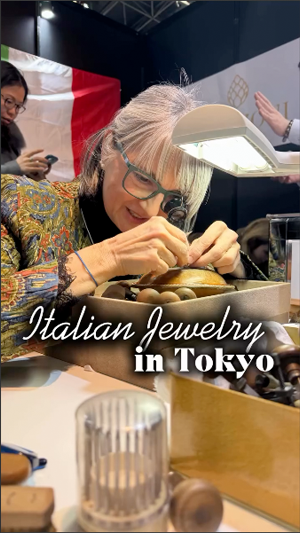
ancient hand-operated copper wheels sitting beside state-of-the-art laser machines.
Craft here evolves without abandoning its roots.
Traditional tools include:
• wooden laps
• copper polishing wheels
• animal-skin strops
• hand-engraving picks
Modern technology includes:
• CAD/CAM design
• ultra-precision lathes
• UV bonding devices
• laser-guided faceting equipment
• microscopy-based alignment systems
This blend of old and new allows Yamanashi cutters to produce gems with unmatched control and character.
4. Kōfu: The Heart of Japan’s Gem Industry
Kōfu isn’t just a city - it is the beating heart of Japanese gem artistry.
Here you’ll find:
• family workshops dating back 100+ years
• gem-cutting studios
• polishing ateliers
• gemstone wholesalers
• specialized equipment manufacturers
• Japan’s most respected jewelry schools
• high-level craftsmen officially recognized by the government
The entire ecosystem works in harmony, creating a culture that exists nowhere else in Japan.
This is why Kōfu is often called “Japan’s Idar-Oberstein” - a quiet but powerful center of world-class craftsmanship.
5. Signature Styles: What Makes Yamanashi Cutting Unique
Japanese cutters in Yamanashi are known for:
• Ultra-sharp facet edges
Their precision is so refined that collectors often comment that the facets look “drawn with a blade.”
• Mirror-polishing techniques
Stones reflect like water - a result of secret polishing formulas passed down through generations.
• Artistic fantasy cuts
Japan produces some of the world’s most creative fantasy and concave cuts, often incorporating traditional patterns inspired by kimono motifs or temple architecture.
• Minimal-loss philosophy
Where many cutters prioritize maximum brilliance, Yamanashi cutters prioritize maximum respect for the raw material.
This gives Japanese-cut gems a serenity and balance that collectors around the world seek out.
6. The Rise of Yamanashi in the Global Market
For decades, Yamanashi was a quiet regional industry.
But in the last 10 years, something changed:
• international designers began sourcing from Yamanashi
• Japanese-cut gems appeared in major exhibitions
• collectors praised their purity and technical mastery
• the global shift toward natural, untreated stones elevated demand
• social media showcased boutique cutters and ateliers
Today, Yamanashi is emerging as a global influence, especially among connoisseurs who appreciate slow craft, precision, and authenticity.
7. The Next Generation: Schools, Innovation, and Artisan Training
Yamanashi’s specialized schools produce many of Japan’s top jewelry artists.
Students learn:
• classic hand-cutting
• stone polishing
• CAD design
• gem setting
• metalwork
• gemology
• precision micro-engineering
Young cutters are blending tradition with technology:creating new cutting styles inspired by anime, architecture, and contemporary minimalism.
This new wave is pushing Yamanashi into the future - without losing its roots.
8. Why Collectors Love Yamanashi-Cut Gems
Collectors describe Yamanashi-cut stones as:
• exquisitely precise
• balanced and harmonious
• emotionally expressive
• connected to nature
• culturally meaningful
For many, owning a Yamanashi gem feels like owning a piece of Japanese craftsmanship - not just a gemstone.
It is art, history, and heritage in one.
Final Thought: A Hidden Capital With Global Influence Yamanashi may not be as famous as Tokyo or Kyoto, but it holds one of Japan’s greatest treasures:
a living, breathing craft tradition that has survived wars, modernization, and global competition.
In the world of gemstones, Yamanashi is Japan’s hidden jewel - a place where artistry, culture,history, and precision unite.
As collectors worldwide turn toward authenticity and craftsmanship, Yamanashi’s influence will only grow.
Quiet. Dedicated. Timeless.
This is the true heart of Japanese gem cutting.