The World of Master Japanese Jewelry Artisans: Mitsuo Kaji
Mitsuo Kaji is one of Japan’s leading jewelry artists, renowned for his exquisite enamel creations and his lifelong dedication to the preservation and promotion of émaux (enamel) art. Over the course of more than four decades, Kaji has developed a distinctive artistic world under the concept of “Classic & Modern”—masterfully blending the elegance of European decorative arts with a refined Japanese sensibility.
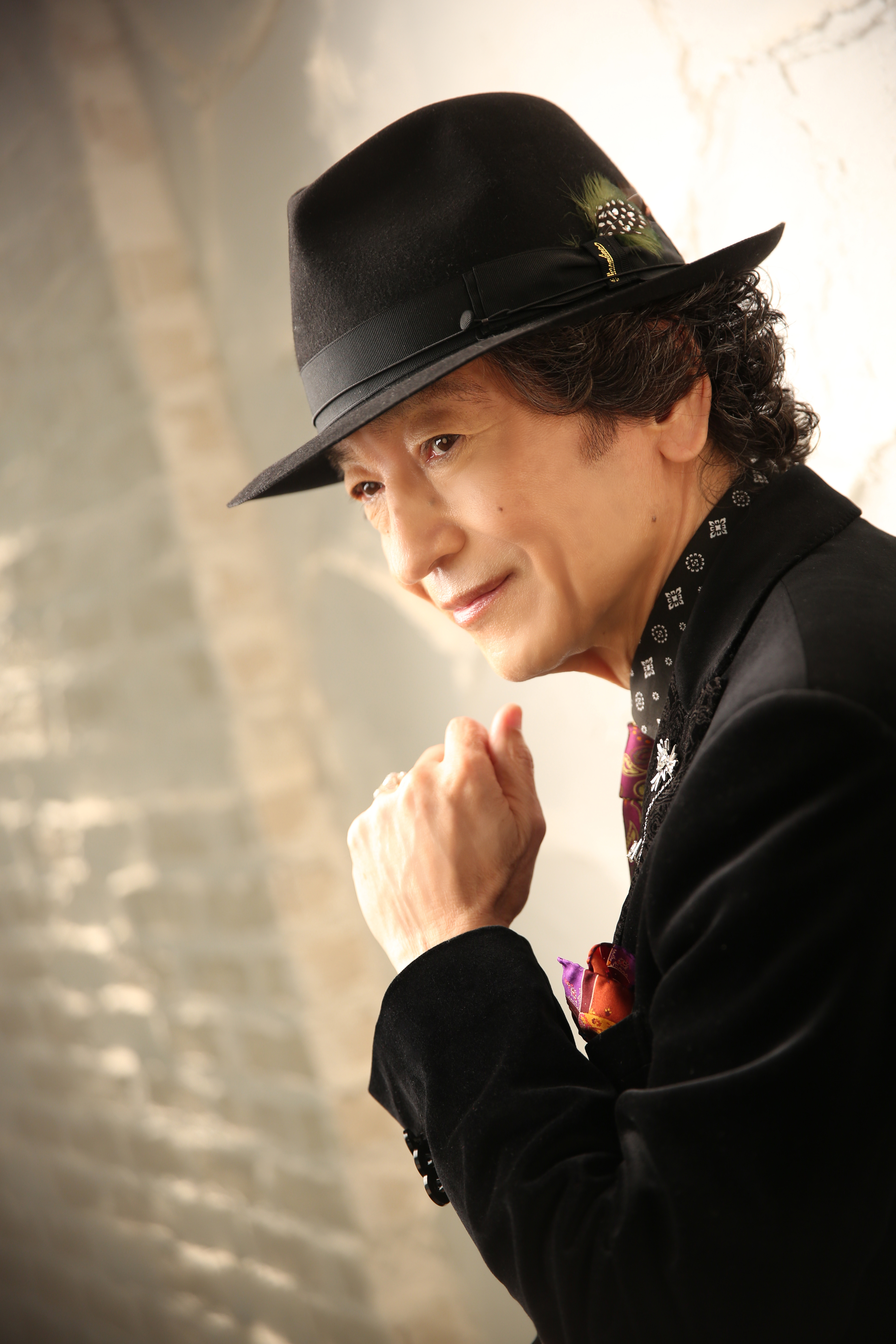
Mitsuo Kaji
Q1: Emaux is fired at 800°C, color by color, layer by layer. When you say this jewelry will last 100 years — what is it about fire-fused glass on metal that makes that promise scientifically true, while a painted canvas fades and a photograph ages?
Mr. Kaji: “Jewelry that will endure for the next 100 years” is my guiding philosophy as a jewelry designer. With every piece I create, I strive to design works that will continue to be cherished and admired, retaining their beauty and brilliance through the passage of time.
One of the great charms of emaux, I believe, is that it is far less susceptible to aging than photographs or oil paintings.
Emaux is created by applying a glass-based enamel onto metal and firing it at a high temperature of around 800 degrees Celsius. In other words, the color is not simply painted on the surface; it is fused into glass. For this reason, it is less affected by light and air, and can retain its vivid colors and beautiful luster over a very long period of time.
When we look at antique emaux pieces created in distant eras, we are often amazed by how much of their original beauty still remains. That is why I feel that emaux jewelry possesses a beauty that transcends time. It is not merely an ornament, but a small work of art to be passed down from generation to generation.
Q2: 148 of your pieces are now displayed at the National Museum of Western Art alongside European masterworks. What is the single quality that makes an emaux piece museum-worthy — versus merely beautiful?
Mr. Kaji: For an emaux work to have the value worthy of being housed in a museum, I believe it must possess more than beauty alone. It needs to embody timeless artistry, exceptional craftsmanship, and a meaningful cultural background.
Emaux is a highly refined decorative art created by firing glass-based enamel onto metal at high temperatures. Within even a small piece, one can find painterly expression, jewel-like colors, and the meticulous handwork of skilled artisans. In particular, emaux works created in France from the late 19th to the early 20th century strongly reflect the aesthetic ideals of Art Nouveau and the spirit of decorative art of that era.
In other words, emaux is not merely an ornament, but a small work of art that conveys the beauty, technique, and culture of its time. That is why I believe it can stand with dignity alongside European masterpieces, and why it deserves to be preserved in a museum and passed on to future generations.
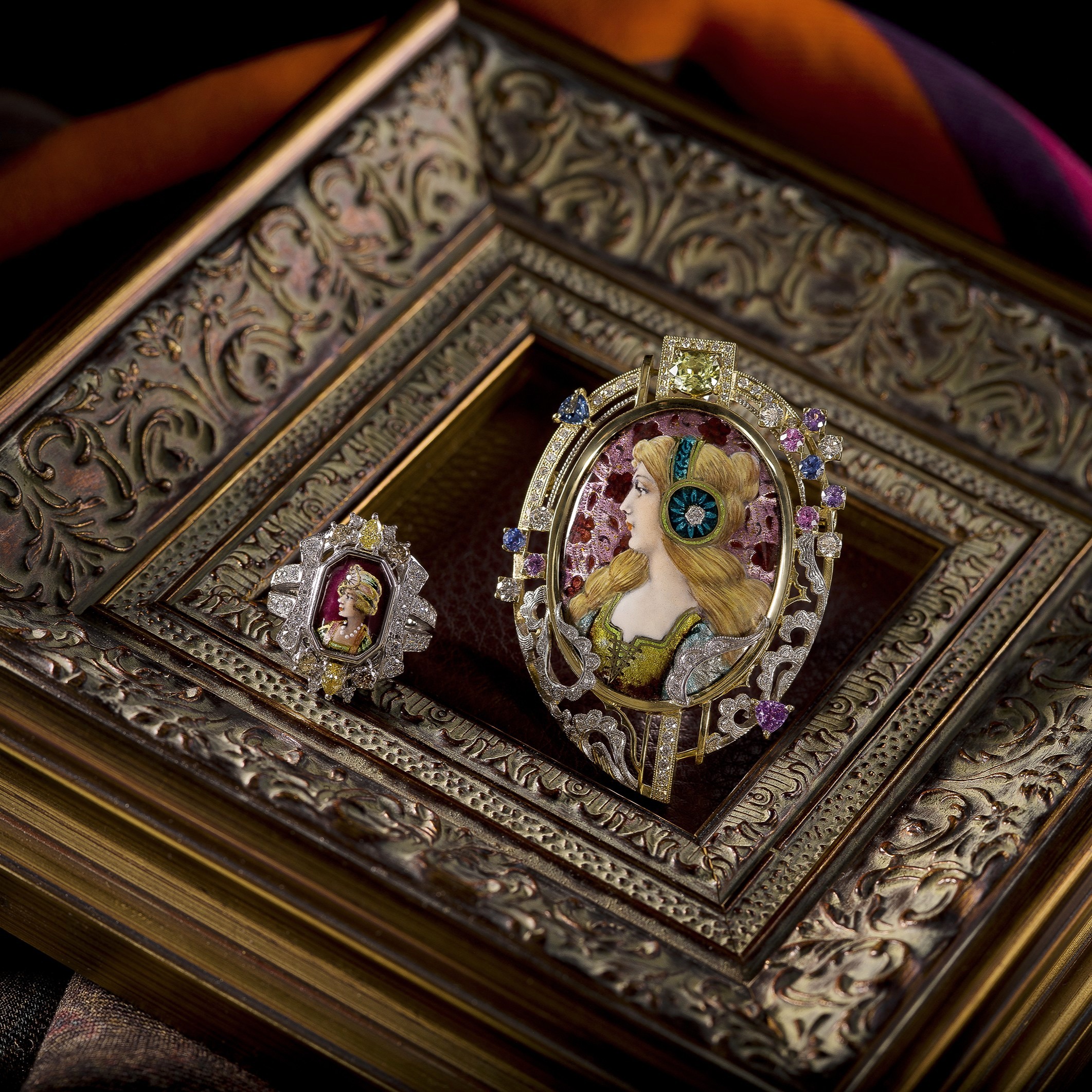
Emaux brooches by Mitsuo Kaji
Q3: There are reproductions, fakes, and modern imitations that look like emaux. How do you spot the difference — and what should someone always ask or check before they buy a piece?
Mr. Kaji: Truly exceptional emaux pieces have a deep, luminous quality unique to glass, and in the painting itself one can sense the warmth of the artist’s hand and a certain refinement.
When considering a purchase, I believe the most important thing is to buy from a trusted specialist or reputable dealer. Emaux is not merely something old; it is a work of art in which technique and aesthetic sensibility reside.
Rather than judging by price alone, it is essential to discern the dignity of the piece itself, as well as its reliable provenance.
Q4: You are the only artist in the world fusing French miniature emaux with Japanese makie lacquer — two fire-based traditions from completely different cultures. What happens technically when you combine them, and why has no one else done this before you?
Mr. Kaji: French miniature emaux and Japanese maki-e are both extremely delicate traditional techniques, yet their nature is entirely different.
Emaux is created by firing glass-based enamel onto metal, producing a sense of transparency and color, as if light were being held within the work. Maki-e, on the other hand, is a technique in which gold or silver powder is sprinkled onto lacquer, expressing a subtle radiance and the uniquely Japanese beauty of space and restraint.
I believe the reason no one had achieved this before is that very few people have possessed a deep understanding and respect for both the French emaux technique and the Japanese art of maki-e, while also having the vision to complete them as jewelry.
For me, this is not simply a fusion of techniques. It is a new artistic challenge—one that connects European decorative art with the traditional beauty of Japan, and carries them forward into the future.
Q5: When you design a new piece — do you start from the gemstone, the emaux painting, or the story you want to tell? Walk us through how a Kaji piece is actually born, from the first idea to the moment it's finished.
Mr. Kaji: However, what is common to all of my creations is that I do not aim to make ordinary jewelry. I strive to create highly original pieces that cannot be easily made by anyone else.
I value the use of delicate and technically demanding craftsmanship, and I am often inspired by traditional European jewelry and decorative arts. At the same time, I seek to reinterpret and reconstruct those traditions as contemporary jewelry.
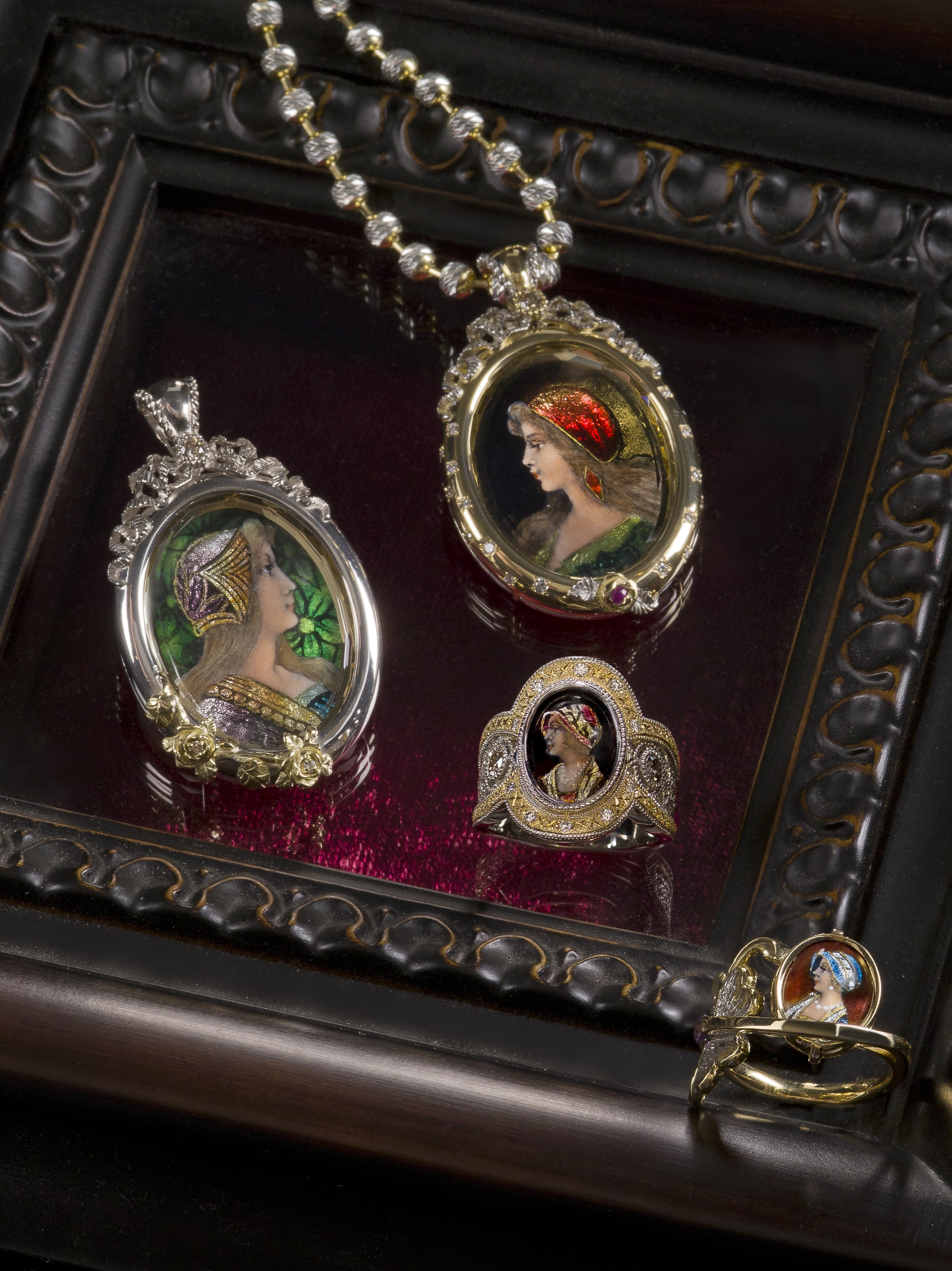
Emaux jewelry by Mitsuo Kaji
Q6: Fine jewelry is often locked in a safe. But you've said yours is made to be worn and loved. Does something actually happen to emaux when it's worn — does light, movement, body warmth change how it looks?
Mr. Kaji: Because fine jewelry is valuable, I fully understand the desire to keep it carefully stored away. In fact, many people purchase jewelry and then put it away almost immediately.
However, I believe that jewelry reveals its true charm only when it is worn. By wearing jewelry, one can feel happier, more uplifted, and experience a special kind of brilliance within everyday life.
That is why I want to create pieces that are not merely beautiful, but also meaningful to wear—works that enrich the heart of the person who wears them.
Rather than being kept away because of their value, I hope my jewelry will be worn, enjoyed, and loved.
Q7: You have a GIA gemologist degree, 40 years of collecting, and pieces now in a national museum. For someone who wants to buy jewelry not just to wear but to grow in value — what are the three things they must look at before spending a single yen?
Mr. Kaji: When purchasing jewelry, I believe it is important not to look only at whether it is beautiful now, or whether it is fashionable at the moment, but to consider whether the piece will continue to hold its value over many years.
What I value most when creating jewelry is to make pieces that people will want to pass down to their children and grandchildren in the future. There is a great difference between jewelry that, with time, is simply melted down for its gold, and jewelry that people feel should be preserved as a work of art.
I also believe that gemstones require three essential qualities: beauty, rarity, and durability.
When purchasing jewelry, it is important not to judge only by trend or price, but to discern whether the piece is something you would want to preserve for the future, and whether it possesses the essential value of a true gemstone.
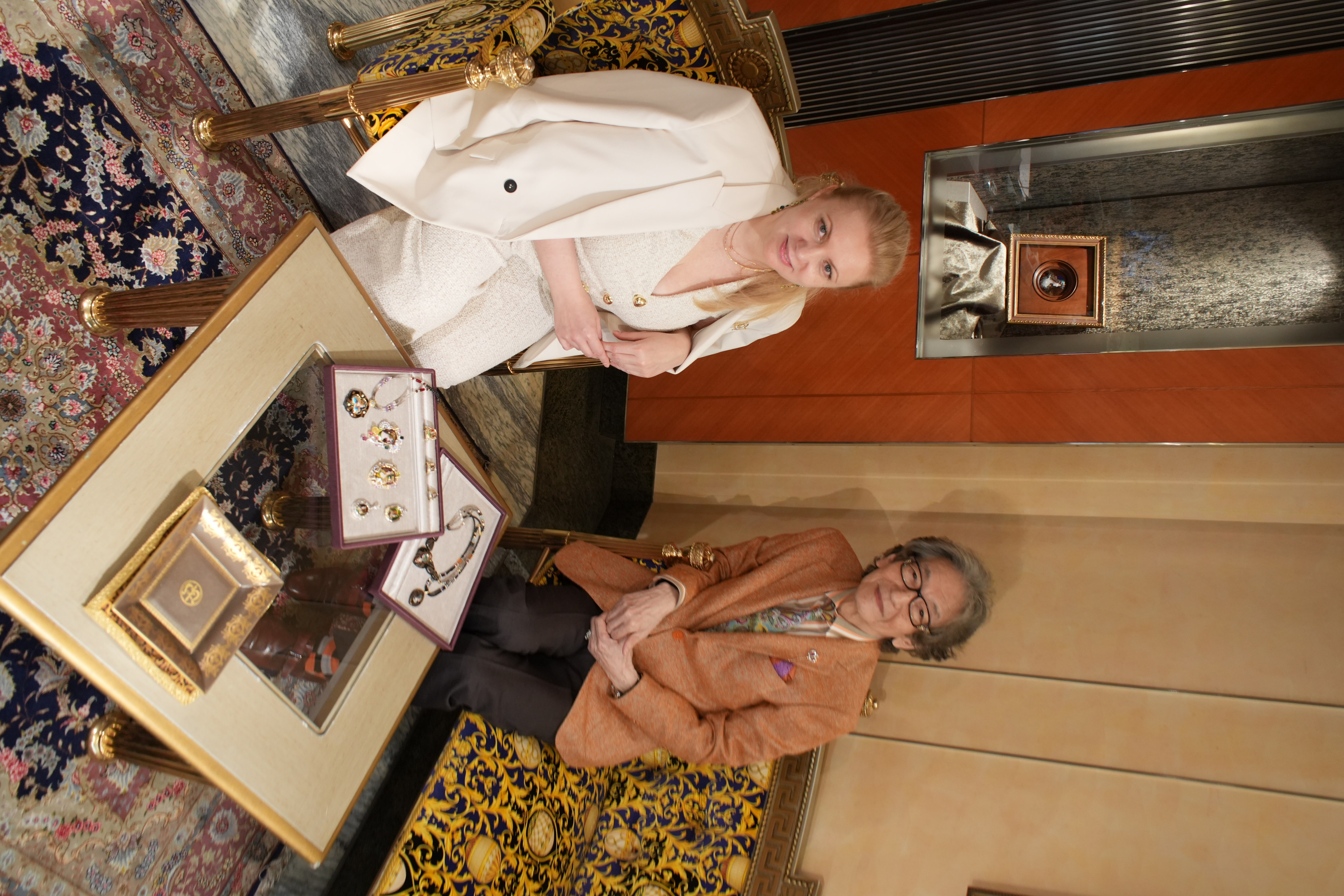
Julia Bernatska and Mitsuo Kaji
Q8: If someone came to you and said — I want one piece that represents everything Kaji Jewelry Art stands for — what would you sh ow them first, and why that piece? 
Mr. Kaji: I believe the most symbolic works of Kaji Jewelry Art are, above all, our emaux jewelry pieces.
I first encountered emaux about 45 years ago in Paris. When I held an emaux piece depicting a beautiful Art Nouveau woman, I felt that if I could elevate this art into jewelry, I would be able to create something truly original—something no one else had made before.
Emaux is an art form rooted in the traditional aesthetic of France. By combining it with my Japanese sensibility and spirit of delicate craftsmanship, I wanted to make it one of the representative expressions of my jewelry.
Throughout my long creative career, I have produced many jewelry pieces, and among them, emaux jewelry holds a particularly important place. It has been a great joy for me to work together with French artists and create so many emaux pieces over the years.
I also feel it is deeply meaningful that many people were able to see my emaux collection at the National Museum of Western Art and discover the beauty and value of emaux. Going forward, I hope to continue sharing the beauty and significance of emaux with many people through jewelry.
Across four decades, Kaji has built something rare in the world of jewelry: a body of work that refuses to choose between beauty and permanence, between European tradition and Japanese sensibility, between the past and the future. His emaux pieces embody the very philosophy he lives by—that true artistry does not fade but deepens with time.
In an industry often driven by trend and turnover, Mitsuo Kaji offers something quieter and more enduring—an invitation to see jewelry not as an accessory, but as a legacy waiting to be worn, cherished, and one day, passed on.